The biotechnology industry thrives on innovation, but for startups and early-stage companies, the high costs of establishing and maintaining lab facilities for testing and R&D can be a significant barrier. Traditional laboratories require substantial capital investment in equipment, maintenance, and personnel, making it difficult for small teams to compete with established players. However, the rise of fully equipped lab spaces for rent—often found in biotech accelerators or biotech spaces for lease—has revolutionized the way startups operate, offering affordable access to cutting-edge infrastructure while fostering collaboration and accelerating scientific breakthroughs.
Cost-Effective Access to Advanced Infrastructure
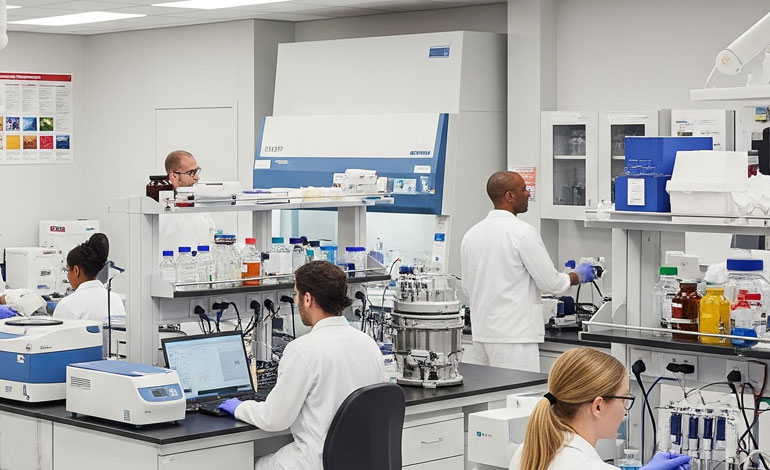
One of the most significant advantages of shared lab spaces is their ability to provide startups with state-of-the-art lab facilities for testing and R&D without the prohibitive costs of building a private lab. High-end equipment such as PCR machines, centrifuges, cell culture hoods, and spectrometry devices can cost hundreds of thousands of dollars—far beyond the budget of most early-stage biotech firms. By leasing bench space in a fully equipped lab space for rent, startups gain immediate access to these tools, allowing them to allocate more resources toward research, talent, and product development.
Flexibility and Scalability
Unlike traditional labs, which require long-term leases and large upfront investments, biotech spaces for lease offer flexible rental agreements. Startups can rent bench space by the month, scale up as their research progresses, or even transition to a larger private facility once they secure funding. This flexibility is particularly valuable in the biotech industry, where funding cycles are unpredictable, and research directions may pivot rapidly.
Collaboration and Networking Opportunities
Shared lab spaces are often housed within biotech accelerators, creating a dynamic ecosystem where scientists, entrepreneurs, and investors interact daily. This environment fosters knowledge exchange, mentorship, and potential partnerships that can accelerate innovation. For example, a startup specializing in CRISPR gene editing might collaborate with a neighboring company working on drug delivery systems, leading to synergistic advancements. Many biotech accelerators also provide business development support, regulatory guidance, and investor connections, further increasing a startup’s chances of success.
Maximizing Efficiency and Growth Through Shared Lab Spaces
Maintaining a laboratory goes far beyond acquiring equipment—it requires managing safety compliance, waste disposal, and day-to-day facility logistics. Shared lab spaces significantly reduce this operational burden by offering centralized support services, allowing startup teams to focus on their research instead of administrative tasks. These facilities often come fully equipped with essential amenities like cold storage, autoclaves, and high-speed internet, streamlining lab operations and accelerating workflows.
Real-world success stories illustrate the value of this model. One biotech startup developing next-generation diagnostics used a shared lab to validate their prototype, which directly contributed to securing Series A funding. Another early-stage company in a biotech accelerator successfully advanced a novel enzyme therapy by leveraging expensive analytical equipment they otherwise couldn’t access. These examples underscore how shared lab environments empower innovation and open doors that would be closed in a traditional, isolated setup.
Conclusion
Shared lab spaces are democratizing biotech innovation, providing startups with affordable access to lab facilities for testing and R&D while fostering collaboration and reducing financial risk. As the demand for flexible, cost-effective research environments grows, biotech accelerators and fully equipped lab spaces for rent will continue to play a pivotal role in accelerating scientific discovery. For budget-conscious biotech entrepreneurs, these spaces are not just a convenience—they are a necessity for turning bold ideas into market-ready solutions. By embracing shared labs, the biotech industry can ensure that the next generation of breakthroughs comes not just from well-funded corporations, but from agile, innovative startups with big visions and limited budgets.
Keywords: lab facilities for testing and R&D, fully equipped lab space for rent, biotech accelerator, biotech space for lease, scientific innovation, biotech startups, cost-effective access, state-of-the-art lab facilities, high-end equipment, networking opportunities, knowledge exchange, mentorship, partnerships, business development support, regulatory guidance, investor connections, compliance, safety regulations, operational efficiency, market-ready solutions, agile startups, innovative research
Written by Crem Co Labs Content Team