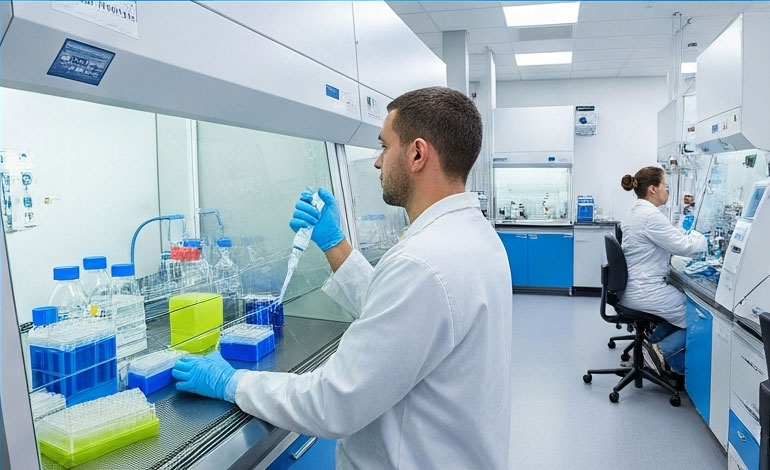
The rise of shared lab spaces is often attributed to their cost-saving benefits—affordable access to equipment, flexible leases, and reduced overhead. But the true power of these collaborative environments lies beyond their physical infrastructure. Shared labs foster vibrant communities where networking, mentorship, and serendipitous connections accelerate innovation in ways that isolated labs cannot replicate. For scientists and entrepreneurs, these intangible benefits often prove more valuable than the benches and microscopes themselves.
The Networking Effect: Where Science Meets Serendipity
Unlike traditional labs confined to institutional silos, shared spaces bring together diverse researchers—biotech startups, academic spinouts, and even freelance scientists—under one roof. This density of talent creates a unique ecosystem where casual conversations at the coffee machine can spark collaborations. A synthetic biologist might partner with a data scientist down the hall to refine an AI-driven drug discovery tool, or a materials engineer could help a diagnostics startup optimize a microfluidic device. These interactions are not incidental; they’re engineered into the design of shared labs through open layouts, communal workspaces, and organized mixers. A 2023 study in Nature Biotechnology found that startups in shared labs filed patents with 30% more interdisciplinary citations than those in private facilities. When diverse minds share equipment, they also share ideas—and that’s where breakthroughs thrive.
Mentorship Without Bureaucracy
For early-career scientists transitioning from academia to industry, shared labs offer something rare: unfiltered access to seasoned entrepreneurs and investors. Many shared labs embed mentorship into their models, pairing founders with “entrepreneurs-in-residence” who’ve navigated FDA approvals or venture capital raises. Unlike corporate or university hierarchies, these relationships are informal and iterative. A PI (Principal Investigator) can grab feedback on a pitch deck over lunch, or troubleshoot experimental design with a neighboring CTO.
The Intangibles: Confidence, Culture, and Crisis Support
Less quantifiable but equally critical are the psychological benefits of lab communities. Launching a biotech venture is isolating; 62% of founders in a BioSpace survey reported “loneliness” as a top challenge. Shared labs combat this with built-in peer groups who celebrate wins (like a successful grant application) and rally during setbacks (say, a failed experiment). This “tribe mentality” boosts resilience—a key predictor of startup survival. Cultural perks also attract talent. Shared labs often host journal clubs, hackathons, and demo days, transforming sterile workspaces into hubs of creativity. At San Diego’s COI Labs, for instance, monthly “Fail Faires” normalize setbacks as learning opportunities, destigmatizing the high-risk nature of biotech.
Conclusion
While pipettes and centrifuges are the backbone of shared labs, their soul lies in human connections. These spaces function as innovation greenhouses, where proximity accelerates not just experiments, but relationships—turning strangers into collaborators, mentors, and allies. For scientists, the real “equipment” they gain isn’t just a PCR machine; it’s the CEO next door who’s survived a Series A crunch, or the engineer who suggests a clever workaround at midnight. As biotech grows increasingly interdisciplinary, shared labs will become less about renting square footage and more about cultivating communities. After all, game-changing science rarely happens at a lone bench—it happens in the spaces between them.
Keywords: shared lab spaces, cost-saving, affordable access, lab equipment, flexible leases, reduced overhead, collaborative environments, lab communities, networking, mentorship, innovation, isolated labs, scientists, entrepreneurs, biotech startups, academic spinouts, freelance scientists, interdisciplinary collaboration, synthetic biologist, data scientist, AI-driven drug discovery, materials engineer, diagnostics startup, communal workspaces, interdisciplinary citations, shared ideas, entrepreneurs-in-residence, Principal Investigator, startup founders, psychological benefits, peer support
Written by Crem Co Labs Content Team