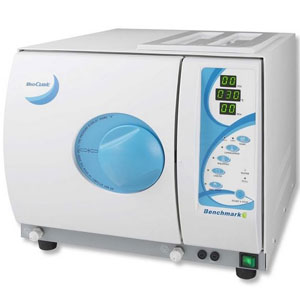
Autoclaves are essential laboratory instruments used to sterilize equipment, media, and waste by applying high-pressure saturated steam. This process ensures the complete elimination of microbial life—including bacteria, viruses, fungi, and spores—making autoclaves indispensable for maintaining a sterile laboratory environment and preventing cross-contamination.
At CREM Incubator, we provide access to high-capacity, high-performance autoclaves that support the sterilization needs of startups and researchers. Whether you’re preparing equipment for a critical assay or decontaminating materials for safe disposal, our shared-use autoclaves help you meet safety standards, enhance workflow efficiency, and maintain research integrity—all without the cost of owning and maintaining your own system.
Here are some of the key applications of Autoclaves:
Call Us!
+1-289-315-3639
-
Sterilization of Laboratory Equipment
Glassware, pipette tips, metal tools, and reusable lab instruments are sterilized before and after use to maintain aseptic conditions in research and testing workflows.
-
Decontamination of Biohazardous Waste
Biological waste, including contaminated cultures and consumables, is safely sterilized in autoclaves before disposal to comply with biosafety and environmental regulations.
-
Preparation of Culture Media
Autoclaves ensure that nutrient media used for microbial growth are completely sterile, preventing unwanted microbial interference and ensuring reliable experimental results.
-
Sterilization of Personal Protective Equipment (PPE)
Autoclaves are used to sterilize certain types of PPE—such as lab coats and face shields—for safe reuse in controlled lab settings.
-
Support for Aseptic Research and Manufacturing
In biotechnology, pharmaceutical, and microbiology labs, autoclaves are critical in maintaining sterile production lines and preventing contamination in product development.
-
Keywords
autoclaves, sterilization, laboratory instruments, high-pressure saturated steam, microbial elimination, sterile environment, cross-contamination, CREM Incubator, high-capacity autoclaves, high-performance autoclaves, researchers, critical assay, decontamination, safety standards, workflow efficiency, research integrity, shared-use autoclaves, laboratory equipment, reusable instruments, aseptic conditions, biohazardous waste, biological waste, contaminated cultures, biosafety regulations, environmental regulations, nutrient media, microbial growth, experimental results, personal protective equipment, PPE, lab coats, face shields, controlled lab settings, aseptic research, contamination prevention, product development