Setting up your first laboratory space is an exciting milestone for any startup, researcher, or innovator. It marks the transition from concept to execution—a place where ideas begin to take physical form. However, this process is often more complex than anticipated. Without proper planning, new lab owners can quickly encounter costly mistakes, operational inefficiencies, and compliance issues. Understanding and avoiding common pitfalls early on can save time, money, and frustration.
One of the most frequent mistakes is underestimating the true cost of building and maintaining a lab. Many founders focus primarily on equipment expenses while overlooking hidden costs such as utilities, maintenance, calibration, consumables, and compliance requirements. These ongoing operational expenses can quickly add up and strain budgets. A comprehensive financial plan that includes both upfront and recurring costs is essential to ensure long-term sustainability.
Another common pitfall is poor space planning. Labs require thoughtful layout design to support workflow efficiency, safety, and scalability. Inadequate planning can lead to overcrowded benches, inefficient movement between workstations, and safety hazards. It is important to consider how researchers will interact with the space, where equipment will be placed, and how future growth may impact layout needs. Designing with flexibility in mind allows your lab to evolve as your operations expand.
Compliance and safety requirements are also frequently overlooked, especially by first-time lab operators. Laboratories must adhere to strict regulations related to ventilation, chemical storage, waste disposal, and emergency preparedness. Failing to meet these standards can result in legal issues, operational shutdowns, or even safety risks for personnel. Consulting with experts or choosing a facility that already meets regulatory standards can significantly reduce this burden.
Equipment selection is another area where mistakes are common. It can be tempting to purchase high-end or specialized instruments upfront, but this often leads to underutilized assets and unnecessary expenses. Instead, it is more strategic to prioritize essential equipment that aligns with your immediate research needs. Access to shared or on-demand equipment can also provide flexibility while minimizing capital investment.
In addition, many new lab setups lack a clear operational workflow. Without defined processes for experiments, data management, inventory tracking, and equipment usage, inefficiencies can quickly emerge. Establishing standard operating procedures (SOPs) early on helps streamline operations, maintain consistency, and improve productivity across teams.
Another overlooked factor is the importance of collaboration and support. Setting up an independent lab can be isolating, limiting opportunities for knowledge sharing and partnership. Being part of a collaborative environment, such as a lab incubator, can provide access to mentorship, technical expertise, and networking opportunities that accelerate growth and innovation.
Finally, scalability is often not considered in the early stages. As projects grow and teams expand, space and infrastructure needs will change. A lab that cannot accommodate growth may require costly relocation or restructuring. Planning for scalability from the outset ensures that your lab can support future development without major disruptions.
Conclusion
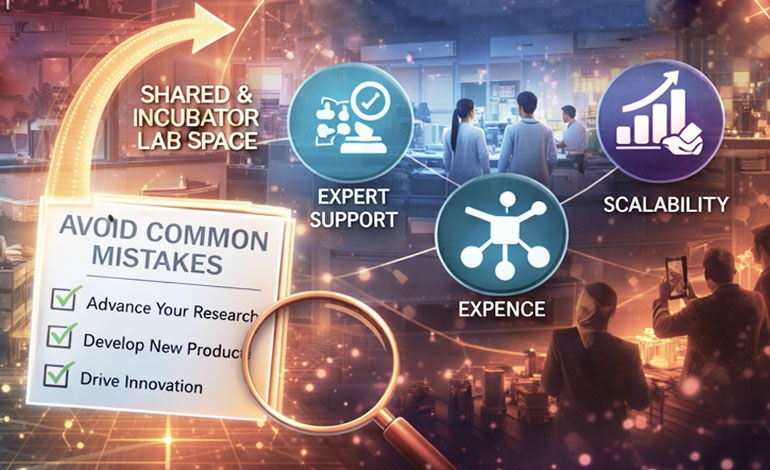
Establishing your first lab space is a significant investment that requires careful planning and strategic decision-making. By being aware of common pitfalls—such as underestimating costs, neglecting compliance requirements, poor space design, and overinvesting in equipment—you can make more informed choices that set your operations up for success. Equally important is recognizing the value of flexibility, collaboration, and scalability in today’s fast-paced research environment. Rather than building everything from scratch, many organizations are turning to shared lab spaces and incubator models to reduce risk and improve efficiency. These environments offer access to essential infrastructure, expert support, and a community of like-minded innovators. Ultimately, avoiding these common mistakes not only protects your investment but also allows you to focus on what truly matters: advancing your research, developing new products, and driving innovation forward with confidence.
Keywords: lab setup, laboratory space planning, lab equipment selection, research lab costs, shared lab space, lab incubator, scientific research facilities, lab compliance, laboratory safety, startup lab setup, flexible lab space, research infrastructure
Written by Crem Co Labs Content Team